BHF Berlin — Towards a More Porous and Sustainable City
Urban Vision and Concept: Recast the utopian castle as a radical porous quarter where Berlin’s past and future interlock, and small plots ignite big urban change.
Project Overview
As a utopian model for urban design, the castle offers a compelling point of departure. Its inner density and contained exterior inspire a reinterpretation of urban form that resists the freneticism of the contemporary metropolis while retaining vibrancy. Drawing from Split, Croatia—where a medieval town inhabits Diocletian’s Palace—the project explores the tension between rigidity and spontaneity, between the traces of the past and the processes of renewal.
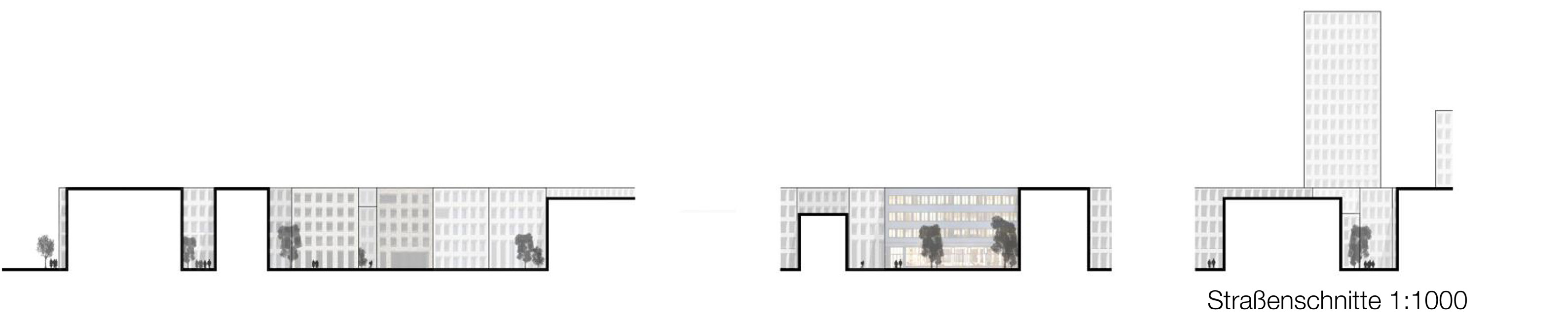
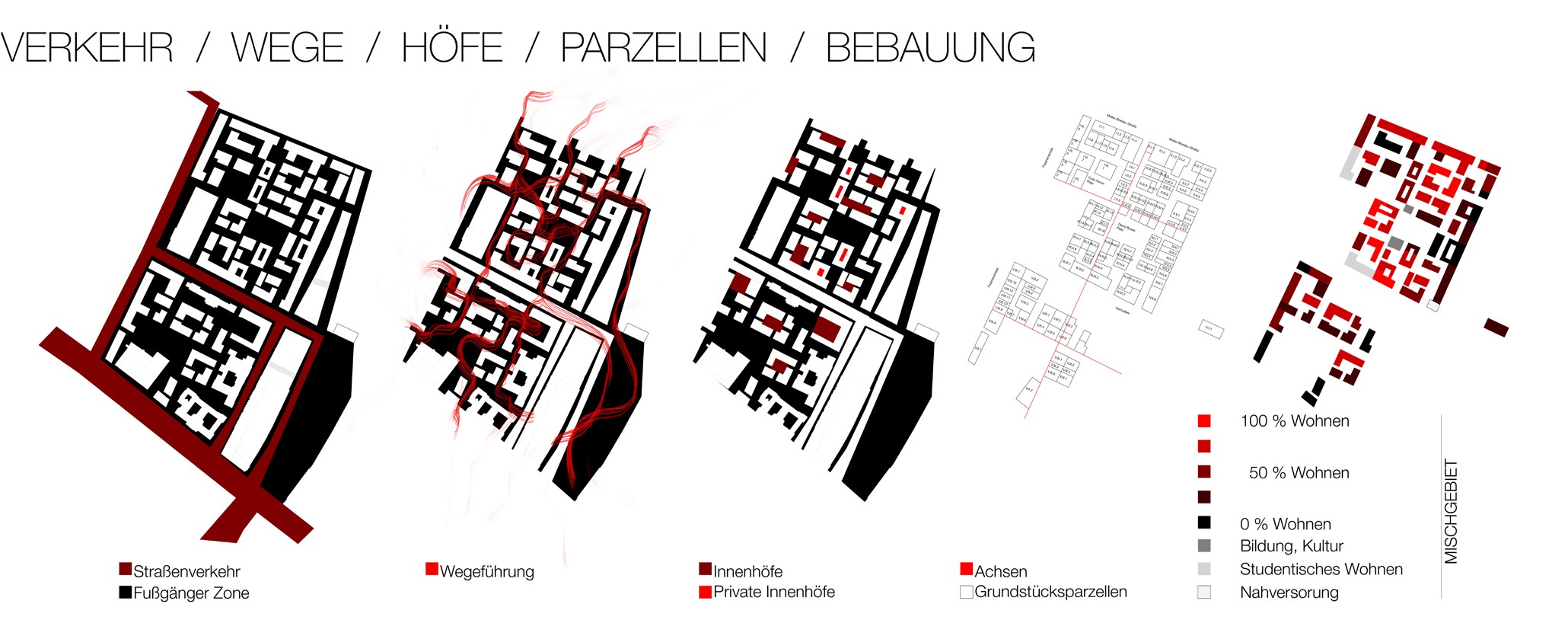
The scheme is rooted in Berlin’s own heritage. The late nineteenth-century perimeter block—with interior courtyards shielded from the street—provides the structural base. A dense fabric is draped across the site and selectively opened to create new sub-blocks, producing a porous urban system that can evolve over time. Instead of large parcels, the plan advocates small plot divisions to foster diversity, affordability, and social resilience.
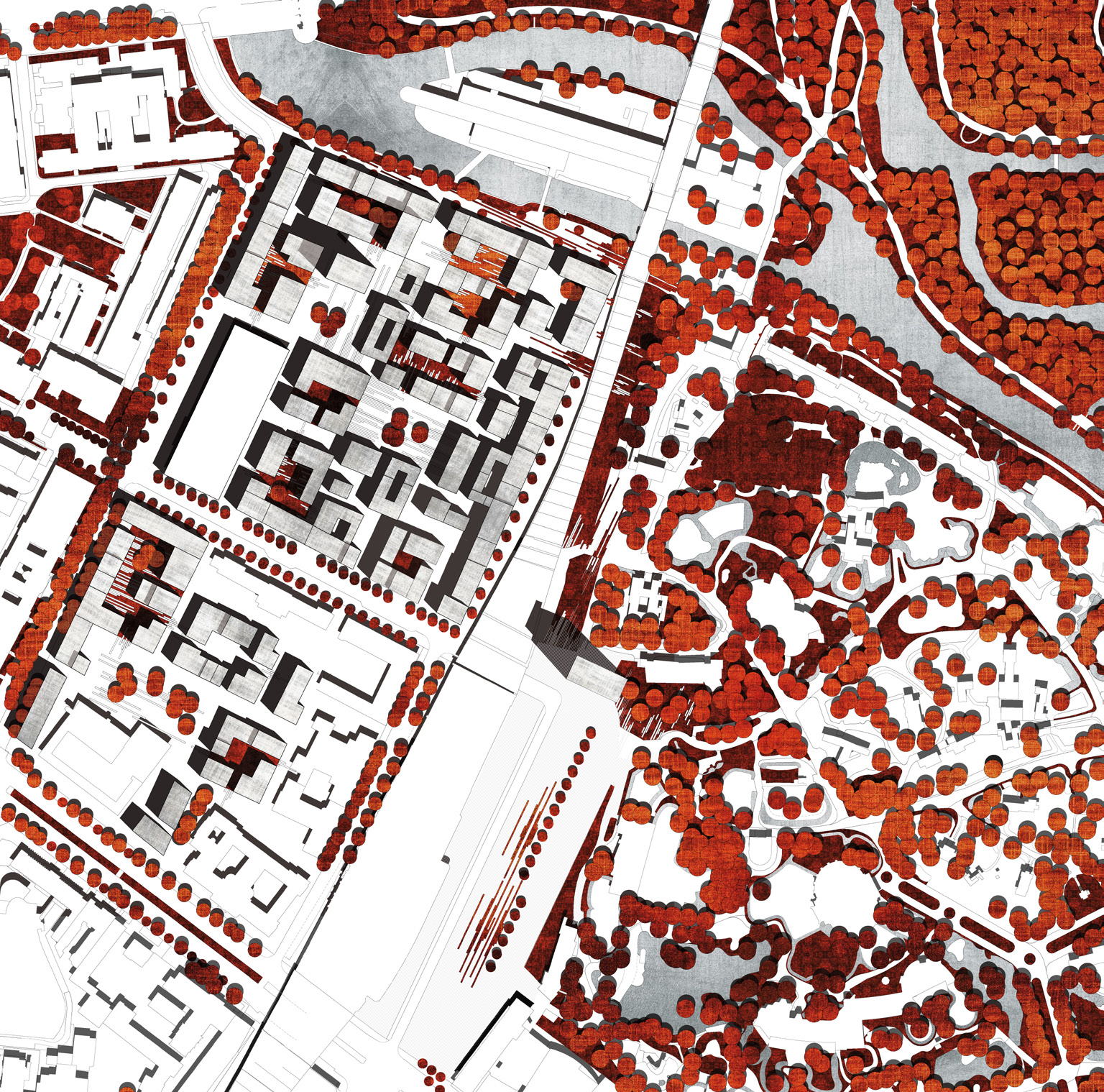
The neighbourhood becomes a mixed-use district with strong emphasis on student housing, local commerce, public courtyards, and community infrastructure. Offices occupy the rail edge to buffer noise, while David Bowie Square is programmed as a public hub anchored by a school. Streets, alleys, and courtyards structure public and semi-private life, and vegetation extends from the courtyards to the street network, stitching Hardenbergplatz, the viaduct, and the new quarter. The result is a richly layered, small-scale urbanism that channels Berlin’s history into a liveable post-pandemic city.
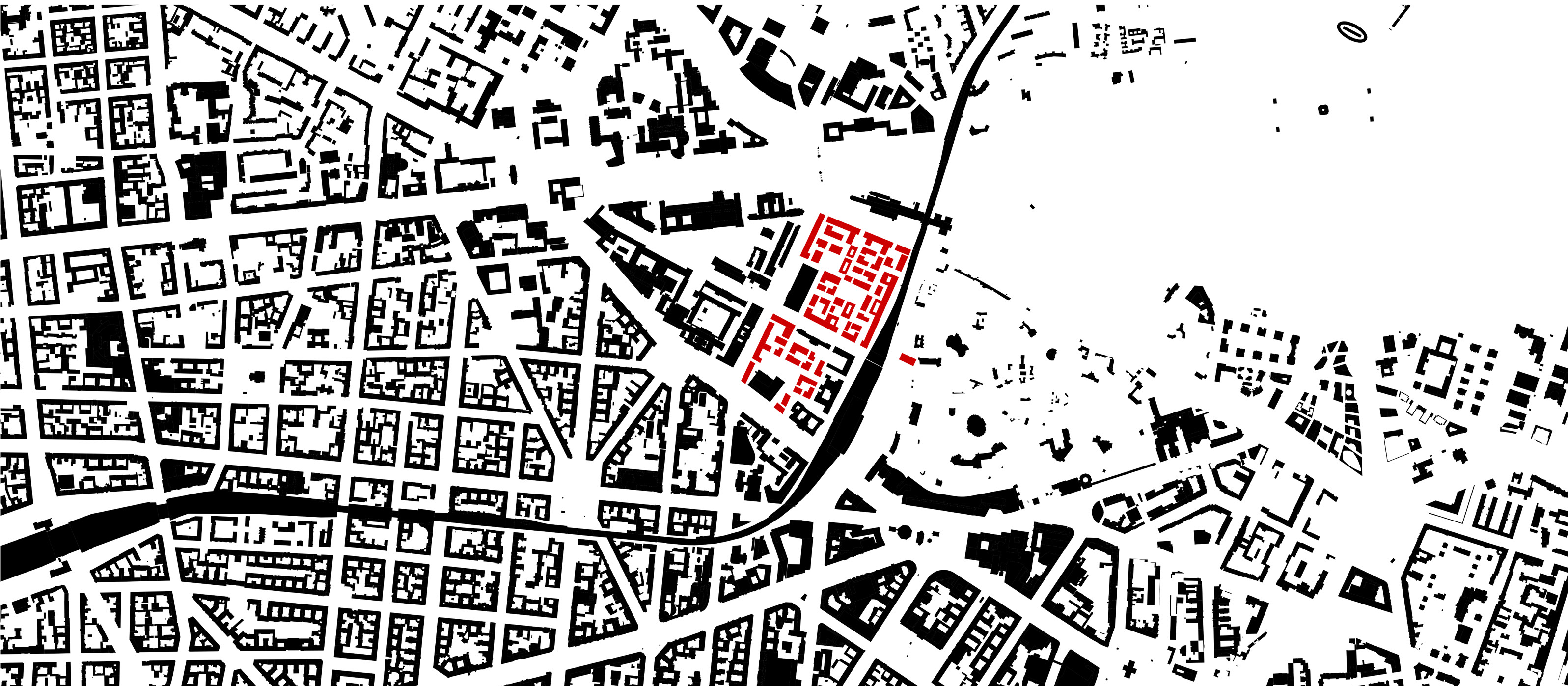
Spatial Strategy
The perimeter block is retained, yet the interior is carved into a network of sub-blocks, courtyards, and alleys. Small plots encourage incremental development and programmatic diversity: student housing, ateliers, local commerce, offices, and community facilities. David Bowie Square becomes a public hub anchored by a school, while green corridors thread through the block to connect the viaduct, Hardenbergplatz, and the station. The result is a porous urban fabric that reconciles noise constraints, mobility, and climate resilience.




Credits
Academic project by Christian Corral, Matthias Manuel Gebhardt, and Peter Matthies at Leibniz University Hannover.